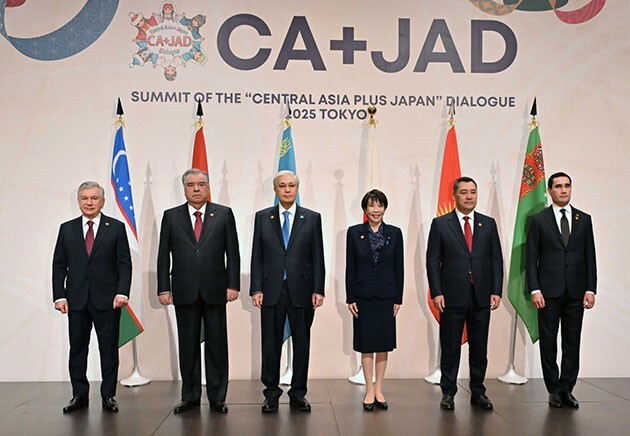
The meeting also carries wider regional significance. Other external partners increasingly view Japan’s role as complementary rather than competitive. By supporting economic coordination and private-sector ties, Japan contributes to resilience and diversification in Central Asia without pushing the region into rigid blocs or confrontational alignments.
In essence, the latest Central Asia–Japan engagement highlights a shared philosophy:
from C5+1 to B5+1, from diplomacy to delivery, and from influence to trust.
In a fragmented global environment, this quiet, business-focused partnership may prove to be one of the most sustainable models of regional cooperation.
What is the C5+1 initiative?
C5+1 is a regional cooperation platform that brings together five Central Asian countries and the United States to coordinate dialogue and joint action on shared political, economic, and security priorities.
Who participates?
o Kyrgyzstan
o Tajikistan
o Turkmenistan
o Uzbekistan
Why was C5+1 created?
Launched in 2015, the format was designed to:
What does C5+1 focus on?
1️ Regional security & stability
2️ Economic cooperation & connectivity
3️ Climate, water & environment
4️ Governance & institutional capacity
How does it work in practice?
Important: C5+1 is not a treaty or an organization. It’s a flexible diplomatic framework—more coordination than integration.
Why does C5+1 matter for Central Asia?
How is it evolving?
Recently, the format has expanded beyond diplomacy toward business and investment cooperation, often discussed as B5+1 (Business 5+1), signaling:
B5+1: A Business-First Partnership Between Central Asia and the United States
The idea of B5+1, where the five Central Asian states engage the United States as a business partner, reflects a broader shift in regional cooperation—from diplomacy-led formats to private-sector–driven integration.
Unlike traditional government-centric mechanisms, B5+1 places business, investment, and entrepreneurship at the center of regional engagement.
What B5+1 Means in Practice
In the B5+1 logic, “5” represents the coordinated private sectors of Central Asia, while “+1” is United States as: a market, a source of capital and technology, and a standards-setter in global business.
The emphasis is not on political alignment, but on: trade facilitation, investment readiness, SME growth, and cross-border value chains.
Why the United States Fits the “+1” Role
From a business perspective, the United States brings: deep private capital markets and institutional investors, global corporations experienced in operating across complex regions,
strong compliance, ESG, and governance standards, innovation ecosystems linking technology, finance, and entrepreneurship.
For Central Asia, this means access not only to funding, but to how business is structured, scaled, and governed.
What Central Asia Brings to B5+1
For the region, B5+1 encourages: coordination among national business communities,
reduction of non-tariff and regulatory barriers, development of regional supply chains,
stronger export orientation toward high-value markets.
Crucially, B5+1 allows Central Asian countries to act collectively but voluntarily, preserving sovereignty while increasing scale and visibility for investors.
Strategic Significance
For the United States, B5+1 supports: a more resilient and self-sustaining Central Asia,
diversified supply chains, reduced dependency on single external markets,
regional stability driven by economic opportunity rather than politics.
For Central Asia, B5+1 offers: credibility with global investors, integration into international business networks, and a path toward sustainable, private-sector-led growth.
In essence, the latest Central Asia–Japan engagement highlights a shared philosophy:
from C5+1 to B5+1, from diplomacy to delivery, and from influence to trust.
In a fragmented global environment, this quiet, business-focused partnership may prove to be one of the most sustainable models of regional cooperation.
What is the C5+1 initiative?
C5+1 is a regional cooperation platform that brings together five Central Asian countries and the United States to coordinate dialogue and joint action on shared political, economic, and security priorities.
Who participates?
- C5 (Central Asia):
o Kyrgyzstan
o Tajikistan
o Turkmenistan
o Uzbekistan
- +1: United States
Why was C5+1 created?
Launched in 2015, the format was designed to:
- Strengthen regional cooperation in Central Asia (a region that historically coordinated weakly as a bloc)
- Provide a structured dialogue with the U.S. at ministerial and expert levels
- Support sovereignty, resilience, and connectivity without creating a military alliance
What does C5+1 focus on?
1️ Regional security & stability
- Counterterrorism and border security
- Non-proliferation
- Managing spillover risks from Afghanistan
2️ Economic cooperation & connectivity
- Trade facilitation and regional logistics
- Investment climate and private-sector development
- Energy cooperation and critical minerals
3️ Climate, water & environment
- Climate adaptation and mitigation
- Water–energy nexus (a critical regional issue)
- Disaster risk reduction
4️ Governance & institutional capacity
- Rule of law and public administration
- Digitalization and service delivery
- Anti-corruption and transparency
How does it work in practice?
- Annual ministerial meetings (Foreign Ministers + U.S. Secretary of State)
- Working groups on priority themes (security, economy, environment)
- Joint action plans and donor-supported projects implemented nationally or regionally
Important: C5+1 is not a treaty or an organization. It’s a flexible diplomatic framework—more coordination than integration.
Why does C5+1 matter for Central Asia?
- Encourages regional thinking beyond bilateralism
- Balances relations with other major powers (EU, China, Russia, Japan, etc.)
- Opens space for business, civil society, and reform dialogue, especially where public–private cooperation is needed
How is it evolving?
Recently, the format has expanded beyond diplomacy toward business and investment cooperation, often discussed as B5+1 (Business 5+1), signaling:
- More emphasis on private sector, SMEs, and investment
- Practical outcomes over declarations
B5+1: A Business-First Partnership Between Central Asia and the United States
The idea of B5+1, where the five Central Asian states engage the United States as a business partner, reflects a broader shift in regional cooperation—from diplomacy-led formats to private-sector–driven integration.
Unlike traditional government-centric mechanisms, B5+1 places business, investment, and entrepreneurship at the center of regional engagement.
What B5+1 Means in Practice
In the B5+1 logic, “5” represents the coordinated private sectors of Central Asia, while “+1” is United States as: a market, a source of capital and technology, and a standards-setter in global business.
The emphasis is not on political alignment, but on: trade facilitation, investment readiness, SME growth, and cross-border value chains.
Why the United States Fits the “+1” Role
From a business perspective, the United States brings: deep private capital markets and institutional investors, global corporations experienced in operating across complex regions,
strong compliance, ESG, and governance standards, innovation ecosystems linking technology, finance, and entrepreneurship.
For Central Asia, this means access not only to funding, but to how business is structured, scaled, and governed.
What Central Asia Brings to B5+1
For the region, B5+1 encourages: coordination among national business communities,
reduction of non-tariff and regulatory barriers, development of regional supply chains,
stronger export orientation toward high-value markets.
Crucially, B5+1 allows Central Asian countries to act collectively but voluntarily, preserving sovereignty while increasing scale and visibility for investors.
Strategic Significance
For the United States, B5+1 supports: a more resilient and self-sustaining Central Asia,
diversified supply chains, reduced dependency on single external markets,
regional stability driven by economic opportunity rather than politics.
For Central Asia, B5+1 offers: credibility with global investors, integration into international business networks, and a path toward sustainable, private-sector-led growth.
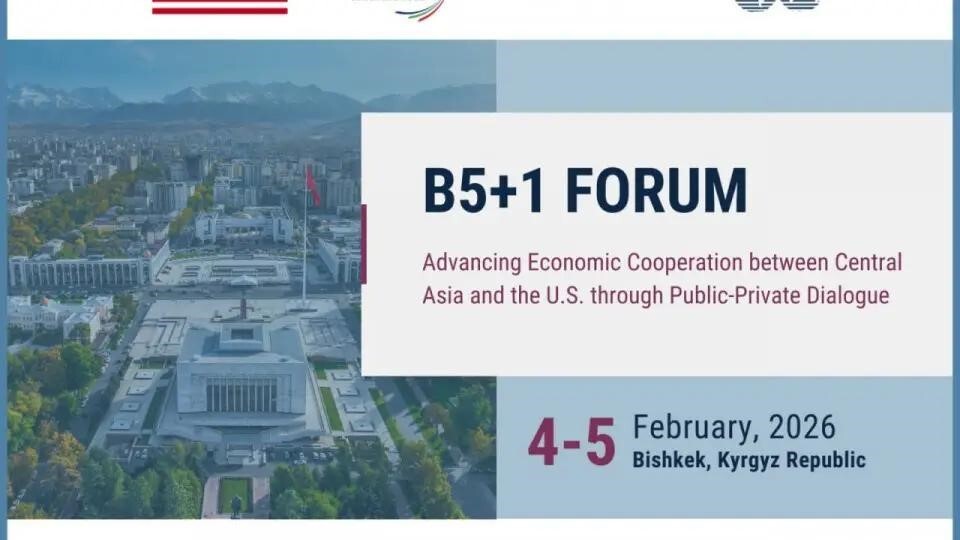
Key Takeaway
B5+1 reframes Central Asia–US engagement from diplomacy to delivery.
It is less about influence and more about enterprise, investment, and long-term value creation.
In a world where economic resilience increasingly defines geopolitical strength, B5+1 may become the most practical and durable form of partnership between Central Asia and the United States. A notable parallel trend reinforces this logic: the broader Central Asia–external partner architecture is shifting from government-centric formats (C5+1) toward business-driven engagement (B5+1). This evolution reflects a growing recognition that private sector cooperation, investment, and entrepreneurship are now the main engines of regional integration. In this context, Japan’s strengths—corporate discipline, long-term financing, SME development, and quality standards—align naturally with a B5+1 approach that prioritizes commerce over politics.
The Organization of Turkic States (OTS)
October 2025 was a historic month for the "Turan" concept, marked by the 12th Summit of the Organization of Turkic States (OTS) held in Gabala, Azerbaijan (October 6–7). This summit represented a shift from cultural solidarity to "qualitative strategic integration."
Here are the key events and breakthroughs from October 2025:
1. The "Gabala Declaration" and "OTS+"
The centerpiece of the month was the signing of the Gabala Declaration, which outlined a new geopolitical vision for the Turkic world.
- The "OTS+" Format: A landmark decision was made to launch "OTS+," a flexible framework allowing the organization to partner more closely with non-member countries and international organizations (such as the EU or SCO) without full membership.
- Regional Peace & Security: The summit’s primary theme focused on establishing the Turkic world as a "single center of power" capable of managing its own regional security (Gaza, Afghanistan, and Azerbaijan-Armenia peace) without external intervention.
2. Military and Defense Breakthroughs
Defense cooperation reached a new level of formalization:
- Joint Military Exercises: President Ilham Aliyev of Azerbaijan formally proposed the conduct of joint military exercises among all OTS members. While many bilateral drills already occur, this move aims for a unified "Turkic operational reflex."
- Defense Industry Integration: Leaders discussed synchronizing their defense industries, particularly focusing on the proliferation of Turkish UAV (drone) technology across Central Asia.
3. Digital and Economic Innovation
The summit introduced several "future-proof" institutions:
- Cybersecurity Council: Proposed by President Tokayev (Kazakhstan), this council will coordinate joint defenses against cyber threats and information warfare.
- Digital Innovation Center: A new center to support startups and venture capital across the Turkic states was greenlit, with a focus on Artificial Intelligence (AI).
- Economic Partnership Council: President Mirziyoyev (Uzbekistan) suggested establishing a permanent council for economic partnership headquartered in Tashkent to accelerate the "Turkic Investment Fund" projects.
4. Cultural and Linguistic Unity
- Common Turkic Alphabet: Significant progress was made toward the official adoption of the 34-letter Latin-based common alphabet. Member states agreed to begin harmonizing their national education systems to reflect this new script.
- Turkmenistan’s Integration: Turkmenistan expanded its involvement by becoming an observer state in the Turkic Academy and the Turkic Culture and Heritage Foundation, signaling its move toward full OTS membership.
- Turkic Museum Card: To boost tourism, a "Joint Museum Card" was adopted, which will allow citizens of Turkic states to visit cultural heritage sites across the union with a single pass.
5. Transport and the "Middle Corridor"
October saw the reaffirmation of the Middle Corridor (Trans-Caspian Route) as the priority logistics artery.
- Digital Monitoring: Kazakhstan proposed a "Digital Monitoring Center" to track cargo flows in real-time between China, Central Asia, and Europe via Turkey.
- Railway Progress: Final commitments were made for the China–Kyrgyzstan–Uzbekistan railway, a project that will link the eastern and western parts of the Turkic world more effectively.
Summary of Status:
In October 2025, "Turan" moved from being a symbolic idea to an institutional reality. The focus shifted toward hard security, digital autonomy, and economic independence, positioning the Turkic states as a unified bloc between the East (China) and the West (EU/USA).
Gulsum Akhtamberdiyeva,
December 30, 2025
ORIGINAL ARTICLES IN JAPANESE (Meeting of the Leaders of Central Asia and Japan, Meeting of the Leaders of Central Asia and Turkey, as well as the B5+1 Meeting (Businesses of Central Asia and the USA)).
